The Coming Water Crisis in America

94

By Jeff Berndt

Water, Water Everywhere? Not so much…

We’re on the edge of a water crisis in the United States. Ongoing development in the American Southwest has created an ever-rising demand for a resource that has always been in short supply in the region. Civil engineering projects over the last century have made this development possible, but we seem to be reaching the point where current population levels in Nevada, Arizona, and Southeastern California are becoming unsustainable. People are living in a desert, and using water to do things like filling swimming pools, growing lawns, and creating golf courses. Sooner or later, we’re going to have to face the inevitable conclusion that this can’t go on. There are several indicators that we are headed for disaster. Here are a few.

Lake Mead
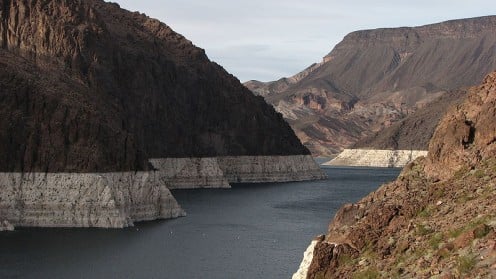
You can see the former water level here. Image courtesy Wikimedia Commons
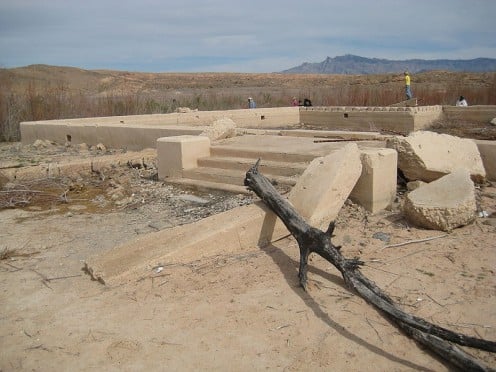
The town of St. Thomas ought to be underwater. Image courtesy Wikimedia Commons

Lake Mead

A man-made lake, Lake Mead is stacked up behind Hoover Dam, and supplies water and, via the dam, electricity to places like Las Vegas and Los Angeles. The problem is that it’s going dry. The water level in Lake Mead has been steadily dropping since the year 2000, and is now only slightly higher than it was during the harsh 1965 drought. The drop in Lake Mead’s water level is proportional to the growth of thirsty cities in the surrounding desert—cities like Las Vegas. If current trends continue, the Scripps Institution of Oceanography at UC San Diego predicts that the lake may dry up completely by 2021. Even if this worst-case scenario doesn’t come to pass, there will certainly be shortfalls in both water delivery and electricity generation in the coming decade.

Colorado River

Lake Mead is essentially a wide spot in the Colorado River, which runs over 1450 miles from its source in the Colorado Rockies all the way to the All-American Canal, which diverts its flow away from Mexico and the Gulf of California and toward Imperial Valley in southeastern California. This diversion sends enough fresh water to Imperial Valley to allow its farmers to grow over a billion dollars worth of crops in what would otherwise be a desert. Of course, this miracle has its dark side in that it has turned what would otherwise have been an estuarial marshland in Mexico into a desert.  

Continuing development in the American Southwest has put a great strain on the lower part of the Colorado River, prompting the states that depend on its flow to enter into the Colorado River Compact. You’d think that this would encourage responsible water management, but under the compact, even if the water level in Lake Mead drops to below what it was immediately after Hoover Dam was built, California will still get its full allocation so it can continue to irrigate its desert.

No Problem--We Can Use Great Lakes Water!

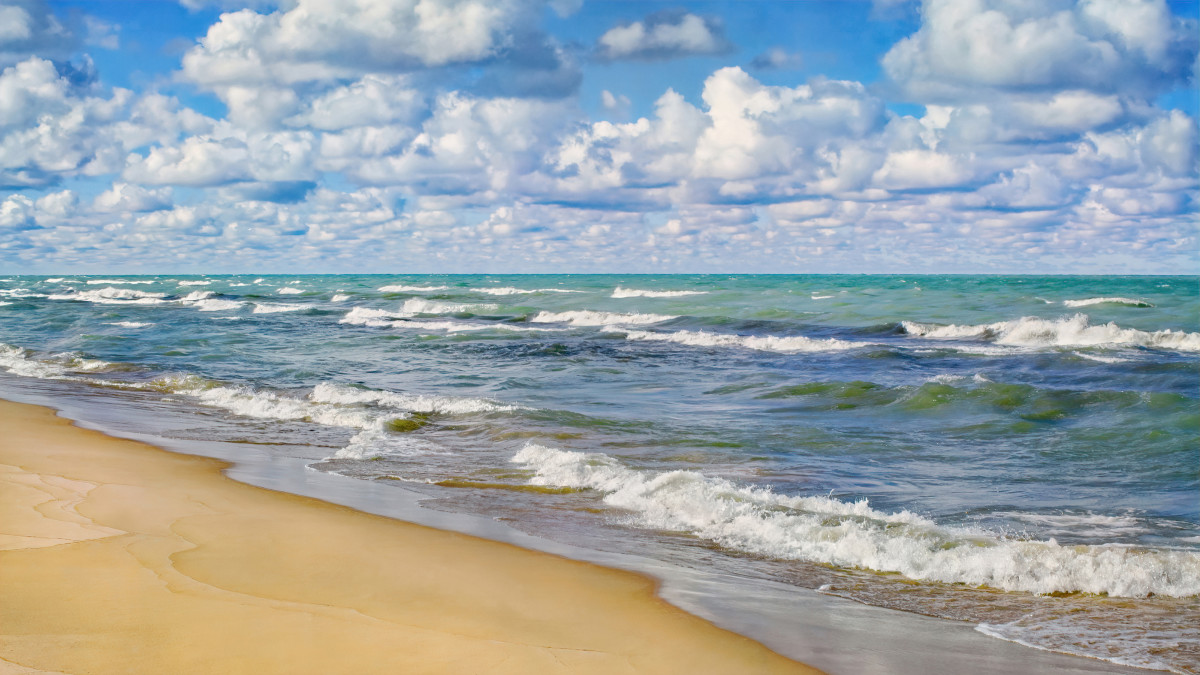
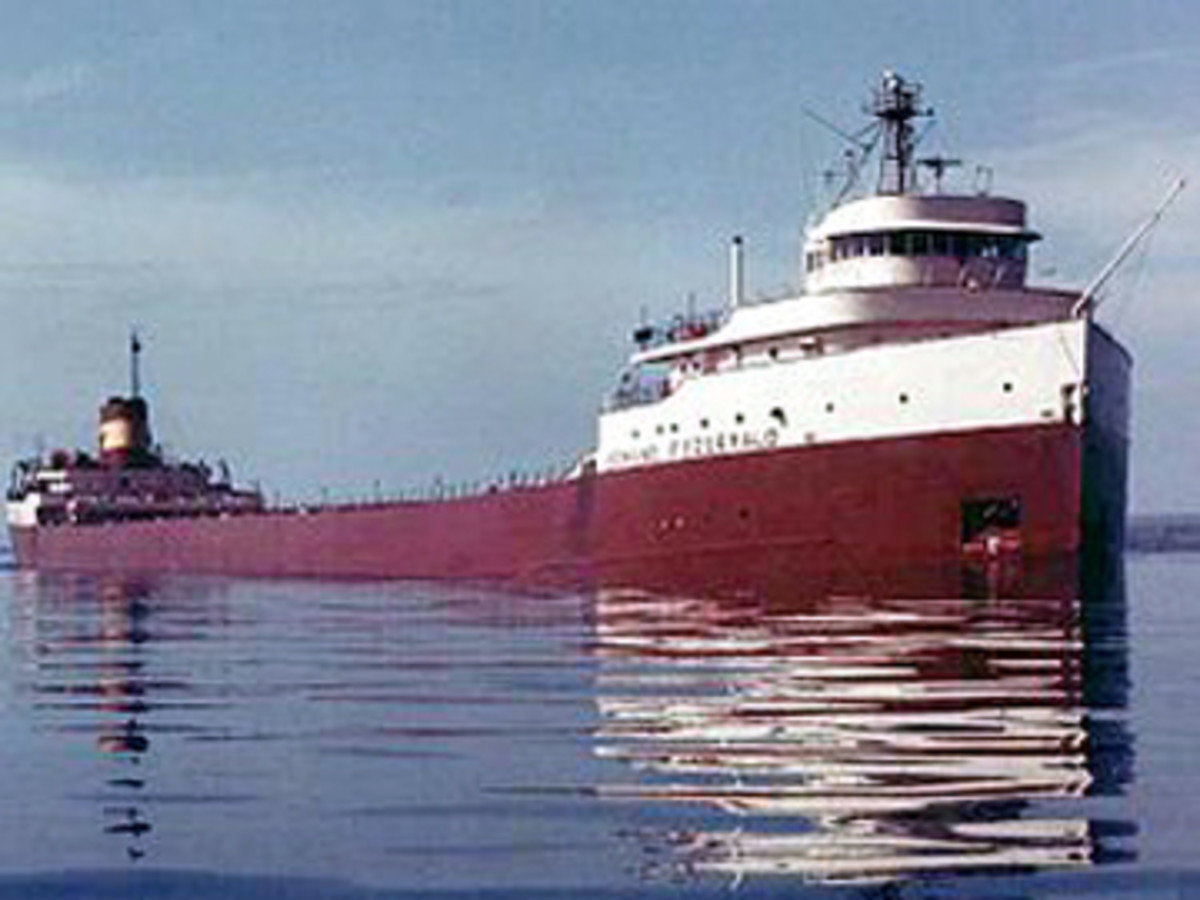
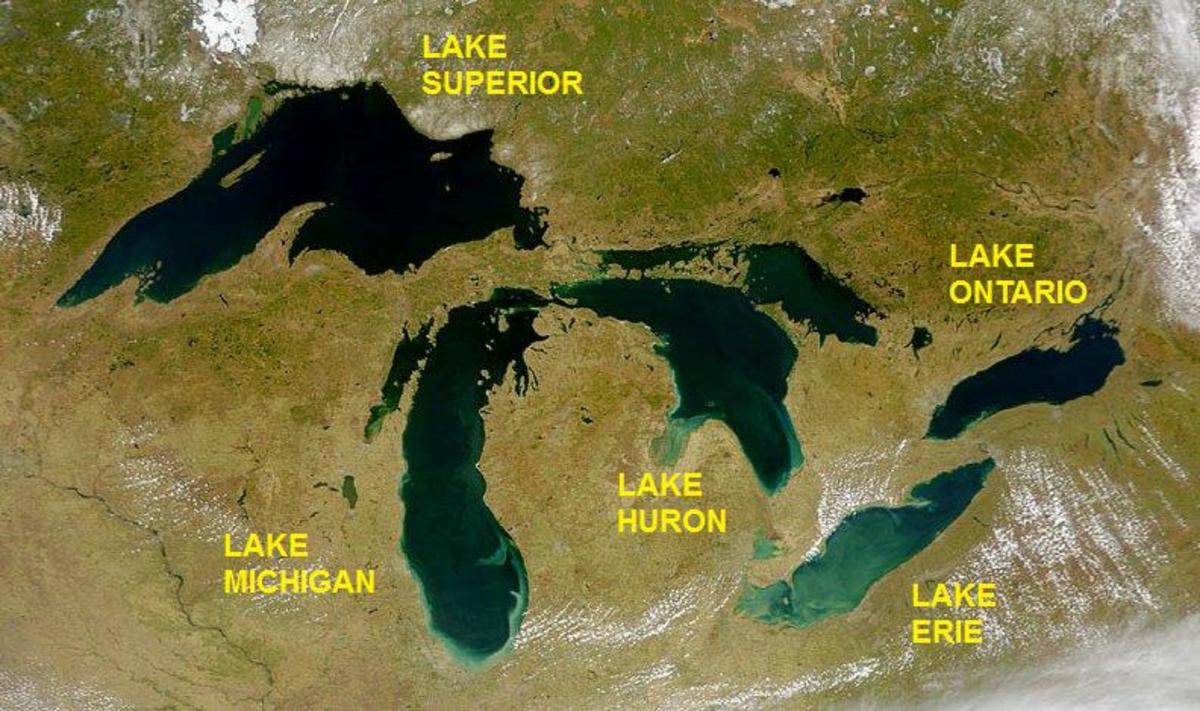
Of course, many folks in the Southwest imagine that we can simply divert water from the Great Lakes to supply their needs. After all, the Great Lakes Basin is the world’s largest resevoir of fresh water. Surely the Lakes can spare a few cubic miles of water to keep the people of Las Vegas from having to look at brown lawns. But even without a major diversion of water to the Southwest, the Great Lakes’ water levels have been decreasing over the past several years. Already ore freighters are unable to run fully loaded on the Lakes without scraping the bottom in shallow areas. If Great Lakes water is diverted while this trend continues, shipping on the Lakes will become functionally impossible, rendering thousands of people jobless in a region that can ill afford more unemployment. 

Predictions of dire economic repercussions aside, history has shown us what happens when people try to turn a desert into farmland.

The Aral Sea…No, not “Sea.” What’s the Word? Desert.

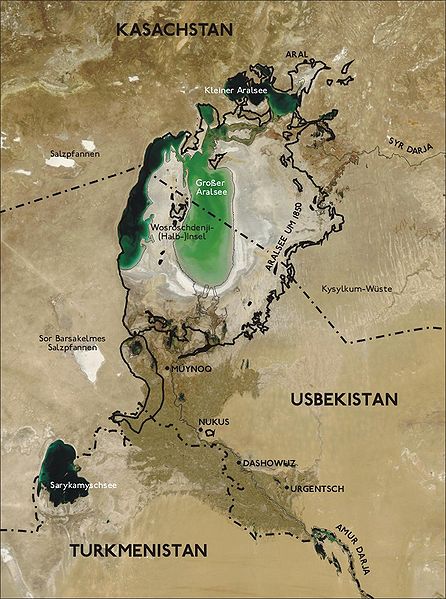
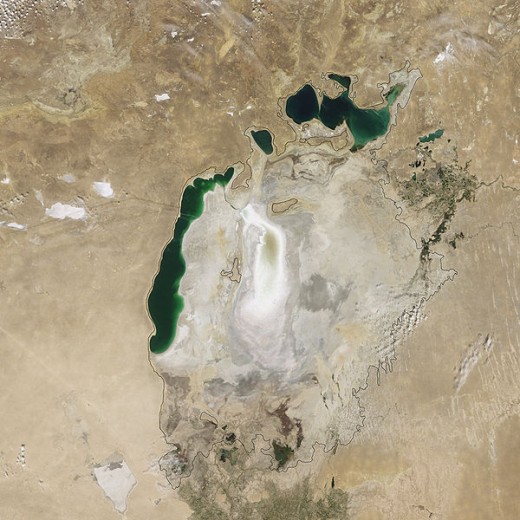
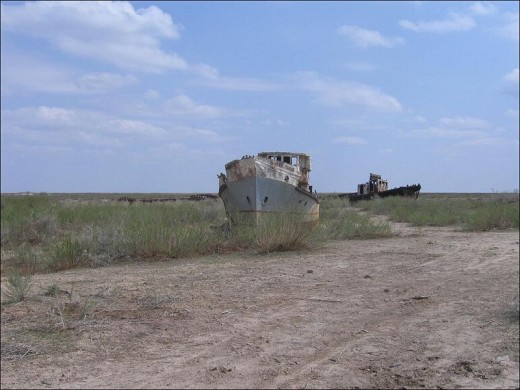
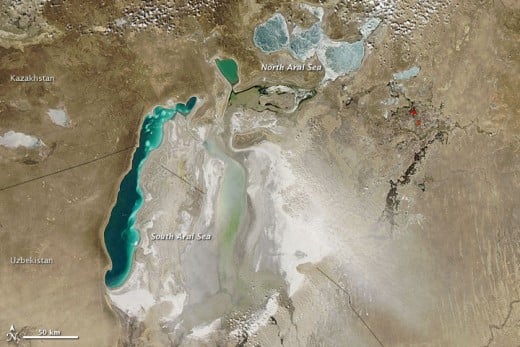
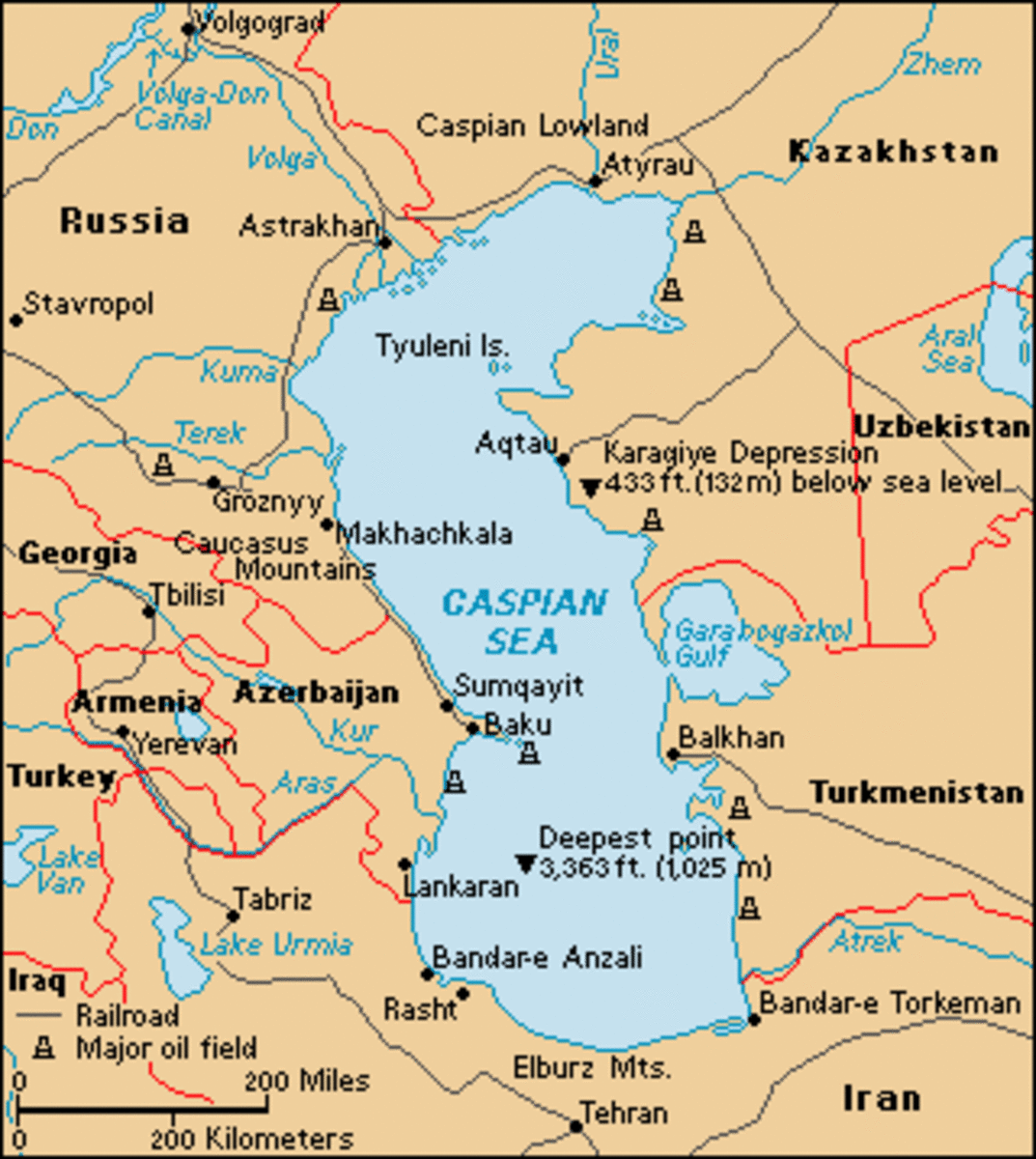
The Aral Sea used to be the world’s fourth largest lake, at a little more than 26,000 square miles. It supported a robust fishing industry that employed thousands. But then, in an effort to create arable land from a desert, the Soviet Union diverted a couple rivers and built some irrigation canals. Today, the Aral Sea is mostly gone. Its surface area is now just under 2000 square miles, and the water is so salty and contaminated that nothing can live in it. The town of Moynaq, which used to be a fishing port, is now nearly a hundred miles from shore. Occasionally, there are dust storms where the water was.

Images of the Aral Sea

Click thumbnail to view full-size
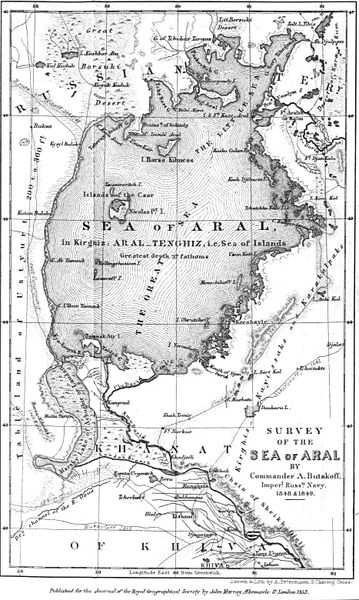
Russian Navy survey map of the Aral Sea, 1853 Image courtesy Wikimedia Commons

Why Am I Worried?

“But that was the USSR, “ you might say. “There’s no danger that the USA would make the same errors as a failed communist regime.” Well, not at the behest of a monolithic government bureaucracy, no. But we certainly might be moved, as a nation, to take pity on a region that is dealing with a drought (never mind that it was a desert before people moved there and remains one today). “People need water to live,” we might tell ourselves. “It would be inhuman to deny them the most basic of necessities when such an abundance exists in the Great Lakes basin.” I suppose it would be, if in fact folks were dying of dehydration because of some natural disaster. But that’s not what’s happening in the American Southwest.
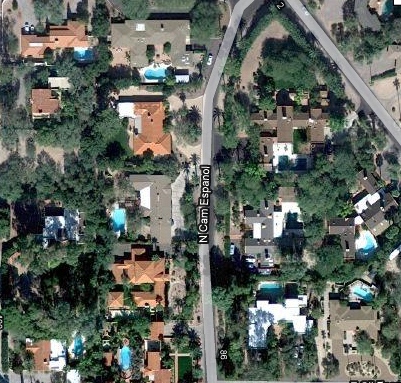
Tuscon. Yes, this town is in the middle of a desert.

The Reason for This Article

Some weeks ago I ran across a letter to the editor in one of my wife’s gardening magazines. This letter stuck in my brain like a bit of popcorn between my teeth, and I’ve been worrying at it all this time. I didn't think to keep the magazine for reference, but the letter went something like this:

Dear Gardening Magazine,

Please help me. I’ve been trying to grow a formal English garden in my backyard for years now, inspired by the lush landscapes I see in your pages every month. But I just can’t get the plants to thrive. I’ve tried everything from moisture-retaining compost to drip irrigation to overnight soaking, and nothing works. What am I doing wrong?

Signed,

Stupid Person,

Tuscon, Arizona

The editor’s response was suitably polite, and suggested that S.P. try growing plants more suitable to her arid climate. My response, even after having thought about it in the back of my head for many weeks, would be decidedly more blunt. It would go something like this:

Dear Stupid,

The reason you can’t grow an English garden is that you live in the freaking desert! Plants like lupines, bugleweed, and forget-me-nots can’t survive in your backyard. Stop wasting water, you idiot, and either plant some cacti or move to a place where your garden will grow.

If I thought that this attitude were uncommon in the Southwest, I wouldn’t worry so much. But a quick look at Google Maps shows that while most Tusconians seem to be content with the desert climate, there is still an alarming number of swimming pools and lush green lawns. Kentucky bluegrass can’t live in the desert unless someone dumps a messload of water on it every day. That water has to come from somewhere. Every drop of water that you waste on your lawn is water that can’t be used to bathe in, irrigate crops, or slake your thirst. It’s water that will never flow down the Colorado River, water that will not reach the sea.

This mindset, that one should be able to make the world bend to one’s wishes, is perhaps the biggest indicator that we’re headed toward a crisis. But I’m still hopeful. After all, people can decide to live with their local climate instead of battling against it. Maybe more folks in the Southwest will come to the realization that Midwest-style lawns are unsustainable for them. I hope they do. Because I will do everything in my power to keep the Great Lakes from becoming America’s Aral Sea.

Unquenchable: America's Water Crisis and What To Do About It
Some constructive suggestions for individual action.
Amazon Price: $18.00
List Price: $27.95
Handbook of Water Use and Conservation: Homes, Landscapes, Industries, Businesses, Farms
For conservation on a slightly larger scale.
Amazon Price: $147.56
List Price: $99.95
Brita 42558 Aqualux Water Pitcher
For goodness' sake, don't buy bottled water! Get one of these instead. It's cheaper (and greener) in the long run.
Amazon Price: $16.87
List Price: $32.53
Klean Kanteen Stainless Steel Water Bottle with Poly Loop Cap (18-Ounce, Pink Renewal)
If you need a bottle of water, use the pitcher to fill one of these to take with you.
Amazon Price: $17.95
List Price: $18.45

Comments

Mentalist acer profile image

Mentalist acer Level 6 Commenter 23 months ago

I was taught in school the the human spiecies thrives because of our ability to adapt...I've come to understand that another word for adapt is to Infringe.

kerryg profile image

kerryg Level 1 Commenter 23 months ago

Wow, I can see what you mean about that letter! We are so doomed.

Honestly, though, "Midwest-style lawns" aren't even that well suited to most of the Midwest. They're suited to England, where they developed! Most Midwesterners are better off with drought tolerant native or non-native warm season grasses such as buffalograss or zoysia. Better yet, skip lawns entirely and plant yourself a prairie! ;)

Jeff Berndt profile image

Jeff Berndt Hub Author 23 months ago

Hi, folks. Thanks for your comments!

M.A., to adapt is to adjust your lifestyle to your environment, not the other way around, as most of us Americans seem to think.

kerryg, lawns in general are a huge waste of time and resources. They started as nothing more than conspicuous consumption. (Oh, look at my land! I can afford not to grow food on it! Aren't I posh!) There's probably another hub in that.

Cheers,

JB

satomko profile image

satomko Level 1 Commenter 23 months ago

Thanks for this hub. Freshwater resources in many places, especially the aquifers in the American Southwest, cannot be replenished at the rate they are being depleted. I'm glad you're trying to bring attention to this issue,but I fear nothing is going to be done about it until it is too late.

Jules 23 months ago

Good job condensing what is a HUGE, world-wide problem with many mind-blowing causes and effects. I have a hard time writing on this topic because I feel I would need 1,000 pages to get my thoughts out, lol...that being said, may I bring a couple more of the larger issues and thoughts to light? Florida's water management and population explosion are just as dire as the Southwest's. Tampa area, in particular. Another driving force which we can act upon is consumer demand for the SW's produce and beef. (Buy local, or better yet, turn your lawn into an edible food forest and grow your own)! Think about every bag of salad that comes out of CA...80-90% water, to name just one example. Another thought: water needs to FLOW, not be damned up. Recommended reading includes: Water Wars by Vandana Shiva, When Rivers Run Dry (on river health world-wide) and Water Follies (US rivers). Blue Planet Run is a great coffee table book to quietly make a statement when people come over and leaf through it. :D It also poses lots of solutions.

OK, I keep thinking of other things...like water pollution! It's very easy to pollute a watershed and VERY hard to remove the pollution. Think ahead before you spray crops, your lawn, etc. We are orchestrating our own demise, for sure. Also, the deeper you pull from an aquifer, the more mineral content it has, which can sometimes be a very bad thing (think: arsenic).

When my children are thirsty, I feel very blessed to always have a ready source of water nearby. My heart aches for the many villages who have had their water sources stolen from them by large agri-businesses who drill deep and dry up their wells. It's torture and murder, plain and simple, and we are accomplices when we purchase food from these businesses. It's very difficult not to, but if you even just make IMPROVEMENTS, or baby steps in that direction, you'll be making an impact and be able to feel better about taking action.

OK, I'd better stop. Thanks, Jeff!

LRCBlogger profile image

LRCBlogger Level 1 Commenter 23 months ago

sobering and great hub. I saw this great indie film a while back, if I can remember the name, I'll post it later. It was essentially about our use of water. The #1 most irrigated 'crop' in the US is grass. People are obsessed with lawns. One day we'll look back and kick ourselves for dumping massive amounts of clean drinking water into our grass.

PrettyPanther profile image

PrettyPanther 23 months ago

Thank you for writing about this. I believe most people don't even think about how much water they use for unnecessary things like green lawns. Education/enlightenment is the key.

festersporling1 profile image

festersporling1 23 months ago

This year was the wettest in a long time in So Cal. Imagine a year when it doesn't rain like this. Deep troubles.

tom hellert 22 months ago

JeffAsa geologist with well drilling background lke mead and other bodies of water sit on areas of recharge for the oolaga aquifer once they run dry areas to the east of lake mead for 100s and up to 1000 miles east could also experience water shortages- as for taking it from "My lakes up here" no offense but screw the idiots including my brother in law that try to live in a dessert - he has the right idea though he says I dont want a lawn... then I have to cut it and if I forget tpo water it it will just die... dirt dont die and dont cost me $...

Great hub... well done...

TH

nflagator profile image

nflagator 15 months ago

Enjoyed your Dear Stupid letter. Yes we're all in for some serious water shortage issues. Have seen it coming for years. Several television programs have shown what might occur. One such program was on the History Channel several years ago, Mega Disasters: Mega Drought

I belong to a gardening blog and posted that while I live on several acres, I was looking into hydroponics. Someone responded "Why, if you have so much property to work with?" I live in FLA, and we have some pretty intense hot summers. Hydroponics and aeroponics greatly reduce the amount of water used for growing plants and crops. Many commercial growers are also turning to this style of growing. The weather is no longer as predictable as it once was, and it won't get any better (in our lifetime). I have several rain barrels built into my gutter system that collect and store water. The yard plantings on my property have to be pretty drought tolerant, or I don't plant them.

Great Hub. Thanks.

Phil Plasma profile image

Phil Plasma 10 months ago

Here in Montreal we get quite a bit of precipitation so in terms of our natural vegetation, we're doing okay. For my vegetables, however, I also have rainbarrels so that I can put even less pressure on city water systems. If it was up to me, it would be required by law to catch the rain in places where rain is plentiful. Great hub earning you a vote-up and an awesome.

FiltersFastLLC Level 1 Commenter 2 months ago

Great hub, and a very informative read!

CWanamaker profile image

CWanamaker Level 5 Commenter 4 weeks ago

What a great read! I agree that our current level of water consumption is unsustainable. Unfortunately everything that we do requires water and our demand for it increases daily. I would have to say that the water crisis is already here. Many small towns in America have already ran out of water! World leaders are already planning for wars over water and future water shortages. Perhaps we need to invest more money/time into constructing desalination plants and atmospheric water generators.

And yes , Tucson has plenty of lush greenbelts in the middle of the desert...fortunately though the culture there is slowly changing. The City is now promoting xeriscape landscaping and water harvesting techniques for its new developments.

Jeff Berndt profile image

Jeff Berndt Hub Author 4 weeks ago

Thanks for the kind words, CWannamaker. I'm pleased to hear that Tucson's water-use is changing for the better. Maybe we can figure out how to stave off the crisis.

Submit a Comment
Members and Guests

Sign in or sign up and post using a hubpages account.


    • No HTML is allowed in comments, but URLs will be hyperlinked
    • Comments are not for promoting your Hubs or other sites

    Please wait working